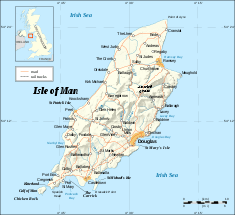
An Isle of Man Trust is a legally binding offshore arrangement governed by the Isle of Man’s Trusts Act 1995, in which a settlor transfers assets to a licensed trustee to hold and manage for named beneficiaries. Located in the Irish Sea nearly equidistant between the UK and Ireland, the Isle of Man is a self-governing Crown dependency — not part of the United Kingdom — with its own independent parliament, tax code, and legal system developed over more than 1,000 years.
Its parliament — the Tynwald, one of the world’s oldest continuous legislatures — governs the island independently of Westminster. The British government handles only military defense and foreign representation, leaving fiscal administration, trust law, and all internal affairs entirely under Manx control. The Isle of Man is only a partial member of the European Union, with involvement limited to customs laws and duties — meaning it is free to set its own direct tax policy independent of EU directives. This political independence is precisely what makes Isle of Man Trusts so effective as an offshore wealth structuring vehicle.
Isle of Man Trust — Quick Reference
| Governing Law | Trusts Act 1995 (Isle of Man) |
| Formation Time | 1–3 Business Days |
| Capital Gains Tax | None |
| Estate / Inheritance Tax | None |
| Income Tax (Non-Residents) | None |
| Annual Government Fees | None |
| Public Disclosure Required | No — fully confidential |
| Audit Required | No (optional at trustee’s discretion) |
| Official Language | English |
| Shelf Trusts Available | No |
Isle of Man Trust Legal Framework
All matters and questions related to an Isle of Man Trust are determined exclusively by Manx law — no foreign court or jurisdiction can override its provisions. The island’s trust legislation has been developed and refined over more than a century, giving it both legal depth and strong international credibility. The primary body of governing legislation includes:
- Settled Land Act 1891 — the foundation of Manx property law
- Trustee Act 1961 — core trustee duties and powers
- Variation of Trust Act 1961 — allows court-approved trust amendments
- Perpetuities and Accumulations Act 1968 — governs trust duration and income accumulation rules
- Recognition of Trusts Act 1988 — implements the Hague Convention on the Law Applicable to Trusts
- Trusts Act 1995 — the primary modern governing statute
- Purpose Trusts Act 1996 — enables non-charitable purpose trusts without human beneficiaries
- Trustee Act 2001 — modern trustee investment duties and impartiality requirements
Notably, the Recognition of Trusts Act 1988 reflects the Isle of Man’s adoption of the Hague Convention on the Law Applicable to Trusts — meaning international trust structures involving the Isle of Man have a clearly recognized legal basis under international law, an important advantage for cross-border asset planning involving multiple jurisdictions.

Key Benefits of an Isle of Man Trust
The Isle of Man’s combination of political stability, a deep legal infrastructure, and a favorable tax environment makes it a compelling choice for offshore trust planning. The following is a comprehensive breakdown of the primary advantages:
No Income Tax for Non-Resident Beneficiaries
There are no Isle of Man income taxes on either distributed or undistributed trust income for non-resident beneficiaries. Important note for U.S. citizens: Americans and others whose home countries tax worldwide income must still declare all trust income to their domestic tax authorities — the Isle of Man exemption does not override IRS obligations.
No Capital Gains, Inheritance, Gift, or Estate Taxes
Isle of Man Trusts pay zero capital gains tax, zero inheritance tax, zero gift tax, and zero estate taxes under Manx law. This makes the Isle of Man an exceptionally efficient vehicle for multigenerational wealth transfer and investment portfolio management, where gains can compound without the drag of capital gains taxation at the trust level.
Complete Privacy and Confidentiality
There is no public register of trust beneficiaries, settlors, or assets on the Isle of Man. Ownership remains fully private, with no disclosure to third parties or foreign governments without legitimate legal cause. For high-net-worth individuals concerned about business competitors, litigation adversaries, or media scrutiny, this confidentiality is a material planning advantage.
Rapid Formation — 1 to 3 Business Days
An Isle of Man Trust can be established in as few as one to three business days once all documentation is properly prepared. This speed compares favorably to many alternative offshore structures and enables clients with urgent planning needs to act quickly.
English Language and Common Law Legal System
All trust documents, court proceedings, and professional communications are conducted in English under a common-law tradition directly analogous to U.K. and U.S. law. This eliminates translation costs, interpretation uncertainty, and the cultural friction that can arise in civil-law jurisdictions.
No Annual Government Registration Fees
Unlike corporations and LLCs, Isle of Man Trusts carry no annual government registration or renewal fees — reducing the ongoing administrative cost of maintaining the structure year over year.
Less Bureaucracy Than U.K. or Irish Equivalents
The Isle of Man’s legal system is deliberately streamlined compared to its British and Irish counterparts. There are no mandatory annual general meetings, no prescribed format for trust accounts, no audit requirements, and no government filing obligations for the trust itself.
Politically Stable, White-Listed Jurisdiction
The Isle of Man has never appeared on an FATF blacklist or grey list, is not on the EU’s list of non-cooperative tax jurisdictions, and maintains full compliance with OECD Common Reporting Standards (CRS) and FATCA. Banking relationships, correspondent banking access, and reputational standing are all materially stronger in a white-listed jurisdiction.
Regulated Professional Trustee Sector
The Isle of Man Financial Supervision Commission (FSC) licenses and regulates all fiduciary service providers, ensuring professional accountability, errors and omissions insurance, and established compliance programs — a meaningful protection for settlors and beneficiaries that is not guaranteed in every offshore jurisdiction.
Isle of Man Trust Structure: Parties and Their Roles
Isle of Man Trusts do not have directors as corporations do. Instead, four distinct roles define the structure and its governance: the settlor, the trustee, the beneficiaries, and the optional but frequently used protector.
The Settlor (Grantor)
The settlor — sometimes called the grantor — is the individual or entity that creates the trust and transfers assets into it. On the Isle of Man, a settlor may simultaneously serve as a beneficiary or protector. Once assets are properly transferred, the settlor relinquishes legal ownership — a core feature of the asset protection benefit. Note that if a settlor retains too much practical control over trust assets, courts in other jurisdictions (particularly the United States) may treat the assets as still belonging to the settlor for creditor protection purposes. Careful drafting of the trust deed is essential to avoid this outcome.
Trustees
Trustees hold legal title to trust assets and manage them in accordance with the trust deed and the Trustee Act 2001, which requires them to act impartially and in the best interests of all beneficiaries. On the Isle of Man, trustees must fall into one of three categories:
- Fiduciary service providers licensed by the Isle of Man Financial Supervision Commission (FSC)
- Manx Advocates — licensed attorneys or solicitors resident on the island
- Manx Accountants licensed to practice on the island
Using a licensed professional trustee — rather than a personal acquaintance — is strongly recommended for any serious asset protection or estate planning structure. Professional trustees carry errors and omissions insurance, maintain regulatory compliance programs, and have established procedures for handling court orders, creditor claims, and trustee succession events.
Beneficiaries
The trust is established for the beneficiaries — those for whose benefit the trust is administered. Beneficiaries can be named individuals or described by reference to a class (for example, “all lineal descendants of the settlor living at the time of distribution”). Beneficiaries have legal standing to enforce the trust against trustees and can assert their beneficial ownership interests against third parties who wrongfully deal with trust property.
The Protector (Optional but Highly Recommended)
A protector is optional under Isle of Man law but is commonly used in practice. The protector’s role is to provide oversight of the trustee and to serve as an informed liaison between the trustee, the settlor, and the beneficiaries. Typical protector powers include:
- Approving or vetoing significant trustee investment or distribution decisions
- Adding or removing beneficiaries
- Replacing the trustee
- Consenting to amendments of the trust deed
- Receiving regular administration reports from the trustee
Protectors should be qualified professionals or individuals with a thorough understanding of the trust’s terms and purposes — such as a trusted attorney, CPA, family advisor, or in some cases the settlor or a close relative. The division of power between trustee and protector is one of the most negotiated aspects of Isle of Man Trust drafting and should be tailored to the specific planning goals of each client.
How to Form an Isle of Man Trust: Step-by-Step
While Isle of Man Trust formation is relatively streamlined, each step carries meaningful legal and tax consequences. The following is a practical overview of the process from start to finish:
Step 1 — Consult a Licensed Offshore Trust Specialist
Before any documents are prepared, your structure should be designed by an attorney with specific expertise in Manx trust law and your home country’s tax and creditor protection rules. Generic offshore templates routinely fail on both fronts and can create expensive compliance problems later.
Step 2 — Select a Unique Trust Name
Your trust must bear a name distinct from all existing Isle of Man trusts and must end with the word “Trust.” The name check and reservation is typically completed within one business day.
Step 3 — Appoint a Licensed Trustee and Register a Local Address
Engage a trustee licensed by the Isle of Man FSC, a Manx advocate, or a Manx accountant. All Isle of Man Trusts must maintain a registered local address for service of process and official notices — typically provided by the professional trustee as part of their standard administration services.
Step 4 — Draft the Trust Deed
The trust deed is the governing document, specifying the trust’s purpose, beneficiaries, trustee powers, protector powers, investment mandates, distribution criteria, and succession provisions. This is the most legally consequential step and should never be rushed or delegated to non-specialists.
Step 5 — Execute and Fund the Trust
The settlor and trustee execute the deed, typically with notarization. Assets are then transferred into the trust. The timing and method of funding carries significant legal implications — particularly if potential creditors or legal proceedings exist at the time of transfer. Early legal analysis of the funding timeline is critical.
Step 6 — Fulfill Home-Country Reporting Obligations
U.S. persons must file IRS Forms 3520 and 3520-A annually and may have FBAR and FATCA filing obligations. Non-compliance carries severe automatic penalties. Always engage a qualified international tax attorney alongside your offshore trust specialist.
What Assets Can an Isle of Man Trust Hold?
Isle of Man Trusts can hold virtually any category of asset, subject to the trustee’s acceptance and applicable custody arrangements:
- Cash, bank deposits, and money market instruments held at international banks
- Investment portfolios — equities, bonds, mutual funds, ETFs, hedge funds, private equity
- Real property, held directly or through intermediate holding company structures
- Business interests — shares in private companies, partnership interests, LLC membership interests
- Intellectual property — patents, trademarks, copyrights, and royalty streams
- Life insurance policies and annuity contracts
- Yachts, aircraft, and high-value personal property
- Cryptocurrency and digital assets (subject to trustee custody policies)
- Art, collectibles, and other tangible personal property
Isle of Man Trust Taxation — Complete Breakdown
Taxes Imposed by the Isle of Man
The Isle of Man imposes no capital gains tax, inheritance tax, gift tax, or estate taxes on Isle of Man Trusts. The following income tax rules apply under Manx law:
- Non-resident beneficiaries: No Manx income tax on distributions — fully exempt.
- Manx-resident beneficiaries: Undistributed income allocated to Isle of Man residents is taxed at 20%.
- Manx-resident trustees: May be required to file Isle of Man income tax returns, though fiduciary income is treated separately from personal income.
- Offshore-source income: If trust assets are held offshore and income derives from offshore bank interest or transactions, no Manx tax applies — even to resident trustees — provided the income does not arise within the Isle of Man.
U.S. Tax and Reporting Obligations
U.S. persons who establish or receive distributions from a foreign trust must comply with substantial IRS reporting requirements regardless of where the trust is located:
- Form 3520 — Annual Information Return to Report Transactions With Foreign Trusts
- Form 3520-A — Annual Information Return of Foreign Trust With a U.S. Owner
- FBAR (FinCEN 114) — Required if the trust holds financial accounts exceeding $10,000
- Form 8938 (FATCA) — Required for specified foreign financial assets above statutory thresholds
Penalties for non-compliance are automatic and severe — up to 35% of the gross value of any unreported property transferred to a foreign trust. Proper compliance with an experienced international tax attorney is straightforward and does not eliminate the planning benefits of the structure.
Isle of Man Trust vs. Other Offshore Trust Jurisdictions
No single offshore trust jurisdiction is the optimal choice for every client. The right decision depends on your specific asset profile, creditor risk exposure, home-country tax situation, and wealth transfer goals. The comparison below covers the most commonly evaluated alternatives:
| Feature | Isle of Man | Cook Islands | Cayman Islands | Jersey | Nevis |
|---|---|---|---|---|---|
| Capital Gains Tax | None | None | None | None | None |
| Estate / Inheritance Tax | None | None | None | None | None |
| Creditor Protection Strength | Strong | Strongest Available | Moderate–Strong | Strong | Strong |
| Non-Recognition of Foreign Judgments | Partial | Explicit by Statute | Case-by-case | Limited | Statutory |
| Fraudulent Transfer Look-Back | Up to 6 years | 2 yrs (1 yr if known) | Up to 6 years | Up to 5 years | 2 years |
| Public Disclosure | None | None | None | Some disclosure | None |
| Formation Time | 1–3 days | 3–5 days | 3–7 days | 3–5 days | 1–3 days |
| Annual Government Fees | None | None | Moderate | Moderate | Low |
Isle of Man Trusts for U.S. Citizens: What You Need to Know
U.S. citizens and permanent residents can legally establish and benefit from Isle of Man Trusts. However, specific requirements and limitations apply that do not affect non-U.S. clients:
Foreign Trust Classification Under U.S. Tax Law
Under U.S. tax law, a trust is classified as domestic only if a U.S. court can exercise primary supervision over its administration and one or more U.S. persons control all substantial decisions. An Isle of Man Trust with a Manx trustee fails both tests — making it a foreign trust for IRS purposes. This classification triggers specific reporting obligations but does not make the structure illegal or ineffective.
Grantor Trust Rules Apply
If the U.S. settlor retains the power to revoke the trust or controls its assets in ways defined by IRC §671–679, the trust is treated as a “foreign grantor trust.” All income is taxed to the settlor each year on their Form 1040, regardless of whether distributions are made. This is the standard structure for U.S. persons’ offshore trusts and is fully compliant when properly implemented.
Asset Protection Considerations for U.S. Settlors
Because U.S. courts have jurisdiction over U.S. settlors (though not over Manx trustees), a U.S. court can order a settlor to repatriate assets or face contempt. The Isle of Man trustee can legally refuse such an order — but the U.S. settlor themselves remains personally subject to court sanctions. This dynamic is less favorable than the Cook Islands structure, which contains an explicit statutory duress clause establishing an “impossibility” defense for the settlor. U.S. clients with significant litigation exposure should discuss Cook Islands vs. Isle of Man options with an experienced offshore specialist before making a final decision.
Compliance, Record-Keeping, and Administration
Accounting Requirements
Trustees are required to maintain records of trust activities and provide beneficiaries with accounts explaining trust administration. However, the Isle of Man does not prescribe a mandatory format for trust accounts, and trust accounts are not required to be filed with any government authority. This provides significant administrative flexibility compared to most corporate and LLC structures.
Audit Requirements
Audits are not mandatory for Isle of Man Trusts. If an audit is considered appropriate — for institutional investors, large multi-beneficiary structures, or regulatory compliance purposes — it can be arranged by the trustees at the trust’s expense.
Annual Meetings
Isle of Man Trusts are not required to hold annual general meetings or produce annual reports for government authorities. This significantly reduces administrative burden compared to corporate structures operating in the same jurisdiction.
Authorized Capital
Isle of Man Trusts have no authorized capital requirement — eliminating a significant administrative hurdle present in most corporate offshore structures.
Anti-Money Laundering Compliance
While the trust itself has no government filing requirements, the licensed trustee is subject to full AML/KYC regulations under the Isle of Man’s Anti-Money Laundering and Countering the Financing of Terrorism Code. The trustee will conduct client due diligence on the settlor and may request documentation on the source of funds and wealth. This is standard practice in all reputable offshore jurisdictions and reflects the Isle of Man’s commitment to maintaining its white-list regulatory status.
Shelf Trusts
Shelf companies cannot be created for Isle of Man Trusts. All Isle of Man Trusts are established fresh as bespoke legal arrangements tailored to the specific needs of each client.
The Isle of Man: Jurisdiction Overview

Political Independence
The Isle of Man is a Crown Dependency — not part of the United Kingdom, not part of the European Union, and not subject to UK parliamentary legislation without explicit Manx consent. This independence allows the island to maintain its own tax code, trust laws, and regulatory framework entirely separate from UK and EU mandates — a feature no EU-member jurisdiction can offer to offshore trust clients.
A Millennium of Democratic Stability
The Isle of Man’s parliament — the Tynwald — is one of the oldest continuous legislative bodies in the world, with an unbroken democratic tradition spanning over 1,000 years. This institutional stability translates directly into legal certainty for trust clients: the legal environment for offshore planning has remained consistently favorable for decades, without the abrupt regulatory reversals that have occasionally affected other offshore centers.
Regulatory Reputation and White-List Status
The Isle of Man has never appeared on FATF blacklists or grey lists, maintains full compliance with OECD Common Reporting Standards (CRS) and FATCA, and holds a strong reputation among international financial centers. It is a member of numerous international tax information exchange agreements — making it a legitimate, transparent jurisdiction rather than a secrecy haven. This distinction matters: banks and financial institutions worldwide maintain full correspondent relationships with Isle of Man institutions without the friction associated with blacklisted jurisdictions.
Financial Services Infrastructure
The Isle of Man Financial Supervision Commission (FSC) licenses and supervises all fiduciary service providers, fund managers, and insurance companies. The island has a deep bench of experienced trust professionals, international law firms, private banks, and accounting firms with expertise in cross-border wealth management — giving settlors genuine choice in selecting qualified professional trustees and advisors.
Isle of Man Purpose Trusts
The Purpose Trusts Act 1996 enables the creation of trusts established to fulfill a defined purpose rather than benefit human beneficiaries — a specialized instrument with specific applications in sophisticated wealth and finance structures:
- Holding shares in private companies as part of a wider ownership or business succession structure
- Facilitating complex securitization and structured finance transactions
- Orphan structures in project finance and asset-backed lending
- Charitable and quasi-charitable purposes not qualifying for formal charitable registration
Purpose trusts must appoint an enforcer — a named person with legal standing to enforce the trust’s purpose in court — since there are no human beneficiaries to do so independently. Purpose trusts are rarely the right vehicle for personal wealth planning but are an important tool in institutional and corporate offshore structuring.
Frequently Asked Questions About Isle of Man Trusts
What is an Isle of Man Trust?
An Isle of Man Trust is a legal arrangement governed by the Isle of Man Trusts Act 1995, in which a settlor transfers assets to a licensed trustee to hold and manage for named beneficiaries. The Isle of Man is a self-governing Crown dependency with its own independent tax code and legal system, offering significant privacy, tax efficiency, and asset protection advantages for high-net-worth individuals and families worldwide.
Are Isle of Man Trusts legal for U.S. citizens?
Yes — Isle of Man Trusts are fully legal for U.S. citizens. However, U.S. citizens must report the trust to the IRS via Forms 3520 and 3520-A and declare all income annually, since the United States taxes its citizens on worldwide income regardless of where assets are held or where the trust is domiciled. With proper compliance, the structure is entirely lawful and effective.
How does an Isle of Man Trust compare to a Cook Islands Trust?
Both are respected offshore trust jurisdictions with strong privacy and favorable tax treatment. The Cook Islands Trust is widely regarded as the world’s strongest asset protection trust, with a shorter fraudulent transfer look-back period (two years, or one year if the creditor had prior knowledge), an explicit statutory duress clause prohibiting trustees from complying with foreign court orders, and a requirement that all legal challenges be brought in Cook Islands courts under Cook Islands law. For clients primarily seeking maximum creditor protection from U.S. litigation, most experienced practitioners favor the Cook Islands. The Isle of Man is the stronger choice for clients with European connections or estate planning as the primary objective.
Do Isle of Man Trusts pay capital gains tax?
No. Isle of Man Trusts pay no capital gains tax, inheritance tax, gift tax, or estate taxes under Manx law. Non-resident beneficiaries also pay zero Isle of Man income tax on trust distributions. U.S. beneficiaries must still report distributions to the IRS under U.S. worldwide income rules.
How long does it take to set up an Isle of Man Trust?
Typically one to three business days once all documents are properly prepared and the trust name registration is confirmed. The trust deed drafting process may take additional time depending on structural complexity and the number of parties involved.
Can I be both the settlor and a beneficiary of an Isle of Man Trust?
Yes — Isle of Man law permits settlors to be beneficiaries of their own trusts. However, if the primary goal is creditor protection, this arrangement may receive heightened scrutiny from U.S. courts, which may argue the settlor effectively retained control over the assets. An experienced attorney can structure the beneficiary provisions to minimize this risk.
What assets can be placed in an Isle of Man Trust?
Isle of Man Trusts can hold cash, international bank deposits, investment portfolios, real property (via holding structures), business interests, intellectual property, life insurance policies, yachts, aircraft, cryptocurrency, art, collectibles, and virtually any other asset class — subject to the trustee’s acceptance and applicable custody arrangements.
Are Isle of Man Trusts confidential?
Yes. The identity of the settlor, trustees, and beneficiaries does not appear on any public register in the Isle of Man. The trust’s assets and terms remain fully confidential, subject only to disclosure in legitimate legal proceedings or to the Isle of Man FSC as part of trustee AML compliance obligations.
Are there annual government fees for an Isle of Man Trust?
No. Unlike corporations and LLCs, Isle of Man Trusts carry no annual government registration or renewal fees. The primary ongoing cost is the professional trustee’s annual administration fee, which typically ranges from several thousand to tens of thousands of dollars annually depending on asset complexity and transaction volume.
Is the Isle of Man on any tax authority blacklists?
No. The Isle of Man is not on any FATF blacklist or grey list, is not on the EU’s list of non-cooperative tax jurisdictions, and is fully compliant with OECD Common Reporting Standards and FATCA. It is a transparent, well-regulated international financial center with a consistently favorable regulatory reputation spanning decades.
What is a protector in an Isle of Man Trust, and do I need one?
A protector is an optional role that provides oversight of the trustee on behalf of the settlor and beneficiaries. The protector may hold powers such as approving major trustee decisions, replacing trustees, adding or removing beneficiaries, and receiving regular administration reports. While optional, protectors are strongly recommended in most structures — particularly where the settlor wants an informed advocate monitoring the trustee without technically retaining direct control over the assets.
Can an Isle of Man Trust hold real estate?
Yes. Real property is typically held through an intermediate holding company structure within the Isle of Man Trust, which allows the trust to serve as the beneficial owner while the holding company holds legal title to the real estate. This approach provides both privacy and structural flexibility in managing the property.
Conclusion
Isle of Man Trusts are among the most legally sophisticated, tax-efficient, and privacy-protective wealth planning structures available to high-net-worth individuals, business owners, real estate investors, and families with international assets. Their core advantages — no capital gains tax, no estate or inheritance tax, zero income tax for non-resident beneficiaries, complete confidentiality, no annual government fees, and rapid formation in one to three business days — make them a compelling option for a wide range of planning scenarios.
For clients whose primary objective is maximum asset protection from creditors and U.S. civil litigation, a Cook Islands Trust typically offers stronger statutory protections. For clients prioritizing estate planning, multigenerational wealth transfer, or tax-efficient investment management — particularly with a European connection — the Isle of Man’s stability, legal depth, and white-list regulatory standing make it an excellent fit.
The right structure is always fact-specific. An experienced offshore trust attorney can evaluate your asset profile, creditor risk, residency, and long-term goals to recommend the structure that delivers the most durable and effective protection.